

This week’s BL Business Branding Newsletter takes a look at a trademark battle tipping off between Bronny James, Nike, and a Texas-based apparel brand over the use of a “B9” logo. What started as a routine trademark application has turned into an example of how even major brands can run into roadblocks at the United States Patent and Trademark Office, proving that even industry giants can get blocked before they cross the finish line.
According to USPTO records, Nike’s application for the “B9” logo associated with Bronny James (son and Lakers teammate of Lebron James) was refused on the basis of a “likelihood of confusion” with an already-registered mark owned by Back9 Golf Apparel. Both marks were filed in connection with clothing and apparel, putting them in overlapping commercial territory.
Nike submitted its application in February, describing a design featuring a lowercase gothic “b” paired with the number “9.” The logo has already been used in connection with James’ on-court footwear, and Nike has promoted the design in recent marketing efforts. However, the USPTO determined that the similarities between Nike’s proposed mark and Back9’s existing “B9” logo were significant enough to raise concerns, suggesting this branding play might not be a slam dunk just yet.
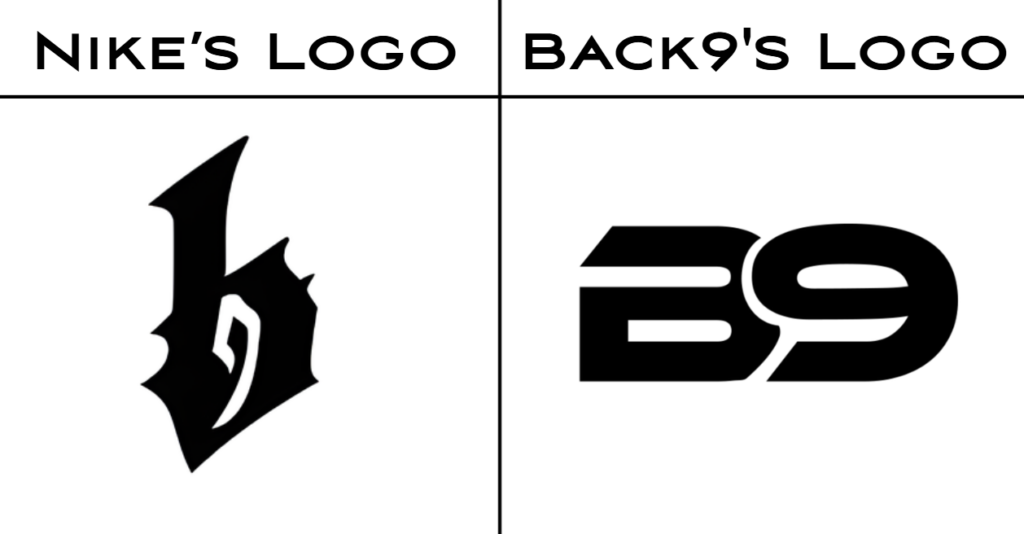
Back9’s mark, which has been in use since 2020 and officially registered in 2022, features overlapping “B9” lettering in a racing-style font. While the visual styles differ, the USPTO’s refusal emphasized not just appearance, but also the overall commercial impression. In the refusal letter, the examining attorney noted that the marks are “essentially phonetic equivalents,” reinforcing the concern that consumers could mistakenly associate the two brands.
Nike has a window to respond to the refusal where it can try to argue that the differences in design and branding are enough to avoid confusion. Another potential path forward would involve seeking a consent agreement with Back9, in which the smaller brand agrees to coexistence.
What Can Businesses Learn From This?
Trademark clearance is an important early step in brand development. Even globally recognized companies like Nike are subject to the same legal standards as any startup when it comes to likelihood of confusion. Conducting thorough searches and evaluating existing marks before launching a brand asset can help avoid costly delays or rebranding efforts down the line. This situation also highlights the importance of considering not just visual design, but overall impression.
Businesses should remember that refusal is not necessarily the end of the road. Strategic responses, coexistence agreements, and thoughtful legal arguments can sometimes overcome initial setbacks. As this case shows, the earlier potential conflicts are identified, the stronger a company’s position will be in protecting and successfully registering its brand.
Have questions about how to protect and elevate your company’s brand? Contact our BL Trademark Team by reaching out to Seth Berenzweig at sberenzweig@berenzweiglaw.com today.