
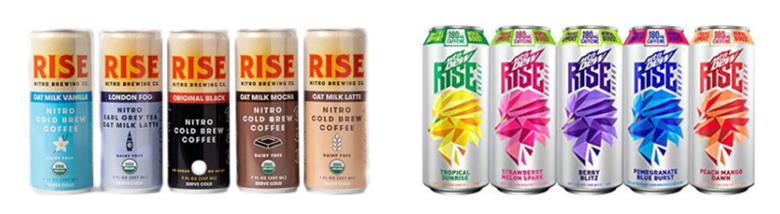
This week’s BL Business Branding Newsletter takes a look at a trademark dispute brewing between PepsiCo and Rise Brewing that could affect how courts evaluate trademarks in future infringement cases. At the center of the dispute is PepsiCo’s use of the “MTN DEW RISE” name for its energy drink. Rise Brewing claims the name could leave consumers confused because of its RISE trademark, which it uses for nitro cold brew and canned coffee products.
The similarities between the products are part of what sparked the dispute. Rise Brewing sued PepsiCo in 2021 after the launch of MTN DEW RISE, arguing that the similarities in the names and products could cause consumers to believe the brands were connected. Rise also argued that PepsiCo’s much larger market presence could create what is known as “reverse confusion,” where consumers might assume Rise Brewing’s products are associated with PepsiCo rather than the other way around.
The dispute has now made its way to the U.S. Supreme Court, which agreed to hear the case during its October 2026 session. The Court is not being asked to decide the entire trademark dispute. Instead, they will focus on the issue of whether a judge or jury should determine how strong or distinctive a trademark is.
The strength of a trademark is one factor courts consider when determining whether consumers are likely to confuse two brands. Rise argues that most federal appeals courts treat a trademark’s distinctiveness as a factual question that can be decided by a jury. The company says the Second Circuit took a different approach by treating the issue as a legal question for judges.
The Supreme Court’s decision could affect how trademark disputes are handled going forward. The decision could also influence how courts consider consumer perception, similar trademarks used by other businesses, and the way a brand is used in the marketplace.
What Can Businesses Learn From This?
This case is a reminder that a strong trademark is about more than simply choosing a unique name or logo. Businesses should consider how distinctive their marks are, how consumers view them, and whether similar terms are already being used by others in the marketplace.
It also highlights the importance of monitoring a brand after securing trademark protection. Even a trademark that has been in use for years can face questions about its strength based on how consumers and other businesses use similar terms.
Have questions about how to protect your company’s brand? Contact our BL Trademark Team by reaching out to Seth Berenzweig at sberenzweig@berenzweiglaw.com today.