
This week’s BL Business Branding Newsletter takes a look at a new trademark dispute between 7-Eleven and Nike that shows how branding can become a big legal issue before a product hits the shelves. At the center of the lawsuit is Nike’s upcoming Air Max 95 sneaker, which 7-Eleven claims copies its iconic orange, green, and red stripe pattern and was originally going to be released on July 11th (“7/11 Day”), a date apparently associated with the convenience store chain’s annual Free Slurpee Day promotion.
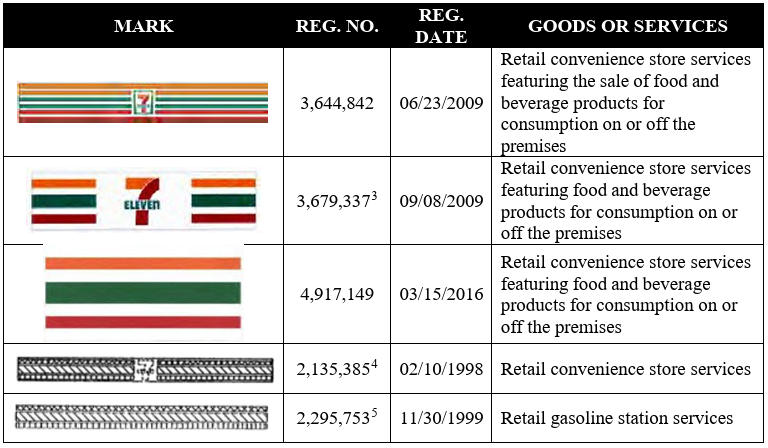
According to a lawsuit filed in the U.S. District Court for the Northern District of Texas, 7-Eleven alleges that Nike’s planned sneaker infringes and dilutes its federally protected “Tri-Color Mark,” a unique combination of orange, green, and red horizontal stripes that has appeared on the company’s stores, branding, merchandise, and licensed products for decades.
7-Eleven claims it has continuously used its signature stripe pattern since 1987 and has secured multiple federal trademark registrations protecting the design. Beyond storefront signage, the company has expanded the mark into apparel, footwear, and accessories through collaborations with brands including Crocs, DGK, Sunday Golf, and Breezy Golf. As a result, 7-Eleven argues that consumers have come to associate the stripe pattern with the company, and may believe products featuring a similar design are officially licensed or endorsed by them.
According to the complaint, Nike’s new Air Max 95 features a stripe pattern that closely resembles 7-Eleven’s Tri-Color Mark. Nike also originally planned a July 11th release date. July 11th is widely recognized as “7/11 Day” and is closely associated with 7-Eleven’s annual promotions. Although the sneaker was not ultimately released on July 11th and has yet to launch, 7-Eleven cites Nike’s original release plans and SNKRS listing as evidence of Nike’s alleged intent to associate with the convenience store chain.
7-Eleven also references media coverage and online discussions referring to the sneaker as the “7-Eleven Air Max 95” or describing it as an homage to the retailer. The company argues these references demonstrate that consumers immediately connected the shoe to 7-Eleven rather than seeing the color scheme as decorative. Based on these allegations, it looks like 7-Eleven has a very strong case.
What Can Businesses Learn From This?
This case shows that consistent branding can become one of a company’s most valuable business assets. By securing trademark registrations for its Tri-Color Mark and consistently using that branding across its stores, merchandise, and licensing collaborations, 7-Eleven placed itself in a much stronger position to enforce its highly valued intellectual property rights. The lawsuit also serves as a reminder that marketing decisions can become evidence in trademark litigation. While the sneaker was never formally released on July 11th, 7-Eleven argues that Nike’s original decision to schedule the launch for “7/11 Day” supports its claim that Nike intended consumers to associate the shoe with the convenience store chain. Nike’s lawsuit shows how a company carefully protecting its trademark can act forcefully to safeguard its brand.
Have questions about how to protect and elevate your company’s brand? Contact our BL Trademark Team by reaching out to Seth Berenzweig at sberenzweig@berenzweiglaw.com today.